20 November 2026
What happens when an EV charger circuit is undersized?
Presented by @thechargingspace
Understanding the risks of an undersized EV charger circuit
An undersized EV charger circuit means the wiring, breaker, and related components cannot safely handle the electrical load the charger draws. When this happens, the most immediate result is a tripped breaker every time you try to charge. But the real danger lies in what happens before that breaker trips: wires heat up, connections weaken, and the risk of electrical fire increases. In short, an undersized circuit does not just fail to charge your car reliably, it creates a safety hazard that should never be ignored.
Why circuit sizing matters for EV charging
Electric vehicle chargers are what electricians call a continuous load. Unlike a toaster or a vacuum cleaner that runs for a few minutes at a time, an EV charger can pull its rated current for hours. Electrical codes require that a continuous load be limited to 80% of the circuit's rated capacity. So a 40-amp charger needs a circuit rated for at least 50 amps. That means the breaker, the wire gauge, and the outlet or hardwired connection must all be sized for that 50-amp capacity. If any part of that chain is undersized, the circuit is stressed from the moment you plug in.
What "undersized" really means
An undersized circuit can take several forms. The breaker might be too small for the charger's draw, so it trips repeatedly. The wire gauge might be too thin for the amperage, causing the wire to heat up even if the breaker holds. The connections at the breaker panel or at the charger itself might not be rated for the continuous current, leading to loose connections and arcing over time. Sometimes the service panel itself lacks the capacity to add a new heavy load, so the whole panel is undersized for the addition. Each scenario produces different symptoms, but all point to the same root problem: the electrical system was not designed for the load placed on it.
Signs that your EV charger circuit may be undersized
The most obvious sign is a breaker that trips during charging, especially after the car has been charging for a while. A breaker that trips immediately when you start charging points to a dead short or a grossly undersized circuit. A breaker that trips after 30 minutes or an hour is classic for an overloaded continuous load. Another sign is a warm or hot breaker handle, warm outlet or plug, or a burning smell near the charger or panel. If the lights in your home dim when the charger kicks on, that can indicate a voltage drop from an undersized wire run or an overloaded service panel. Any of these signs means the circuit is being pushed beyond its safe limits.

The hidden danger: heat buildup
Heat is the real enemy in an undersized circuit. When a wire carries more current than it is rated for, it heats up. The heat degrades the insulation over time, making it brittle and prone to cracking. It also causes connections to expand and contract, which can loosen them. A loose connection creates resistance, which generates more heat, which loosens the connection further, a vicious cycle that can lead to arcing and fire. This process can take months or years, so the danger is not always immediate. But once the damage is done, the circuit becomes a persistent risk even after the charger is unplugged.
What the electrical code says
The National Electrical Code (NEC) in the US has specific rules for EV charging circuits. It requires a dedicated circuit for each charger, meaning no other loads share that circuit. It mandates the 80% continuous load rule, so a 50-amp breaker is the minimum for a 40-amp charger. It also specifies minimum wire gauge based on amperage and distance, and requires GFCI protection for certain installations. These rules exist precisely because undersized circuits have caused fires and equipment damage. Following code is not just about passing inspection, it is about ensuring the circuit can handle the real-world demands of daily charging.
Breaker size and wire gauge: the basics
For a typical Level 2 home charger, the most common circuit sizes are 40 amps, 50 amps, and 60 amps. A 40-amp circuit uses 8-gauge wire and a 40-amp breaker, but it can only safely support a 32-amp charger (80% of 40). A 50-amp circuit uses 6-gauge wire and a 50-amp breaker, supporting up to a 40-amp charger. A 60-amp circuit uses 6-gauge or 4-gauge wire depending on distance, with a 60-amp breaker, supporting up to a 48-amp charger. If you install a 40-amp charger on a 40-amp circuit, you are right at the limit and likely to trip the breaker. If you use thinner wire than required, the wire itself becomes the weak point even if the breaker is sized correctly.
Can an undersized circuit damage your EV?
Yes, it can. When voltage drops because of undersized wiring or a weak connection, the charger may compensate by drawing more current to maintain its power output. That extra current stresses the charger's internal electronics and can shorten its lifespan. Some chargers have protection circuitry that shuts them down if voltage drops too far, but repeated shutdowns and restarts are hard on the components. In extreme cases, a voltage sag can damage the car's onboard charger. The car itself may also report charging errors or stop charging mid-session, which is frustrating and can leave you with a partially charged battery when you need it most.

Load management as a solution
If your service panel is undersized, meaning it cannot handle the additional load of a new EV charger, there are options that do not require a full panel upgrade. Load management systems monitor the total current draw of the home and automatically reduce the charger's output when other large appliances are running. This lets you install a charger on a panel that would otherwise be overloaded. The system ensures the circuit is never asked to deliver more current than it can safely handle. It is a practical way to add EV charging without the cost of upgrading the service. However, it still requires proper wiring and breaker sizing for the charger's maximum output.
When to call a professional
If you suspect your EV charger circuit is undersized, the fix is not a DIY job. Checking wire gauge, verifying breaker size, and assessing the service panel's capacity require electrical knowledge and the right tools. A qualified electrician can measure voltage drop under load, inspect connections for overheating, and determine whether the circuit meets code. They can also advise on whether you need a larger circuit, a load management system, or a service upgrade. Attempting to swap a breaker for a larger one without upgrading the wiring is dangerous, the wire can overheat and start a fire before the new breaker ever trips.
Prevention is straightforward
The best approach is to size the circuit correctly from the start. When planning an EV charger installation, work with an electrician who understands the specific requirements of continuous loads and the NEC rules. They will calculate the wire gauge based on the charger's amperage and the distance from the panel, select the right breaker, and ensure the service panel has room for the new circuit. A properly sized circuit runs cool, never trips, and charges your car reliably for years. It is a one-time investment that pays off in safety and peace of mind.
For homeowners and businesses in the Bay Area, working with a local electrical contractor who specializes in EV infrastructure can make the process smoother. A company like Wooding Electric understands the specific requirements for home and commercial EV charger installations, including proper circuit sizing, load management, and code compliance. Their expertise helps ensure that your charging setup is safe, reliable, and built to last. Whether you are adding a single charger at home or multiple units at a business, getting the circuit size right is the foundation of a good installation.
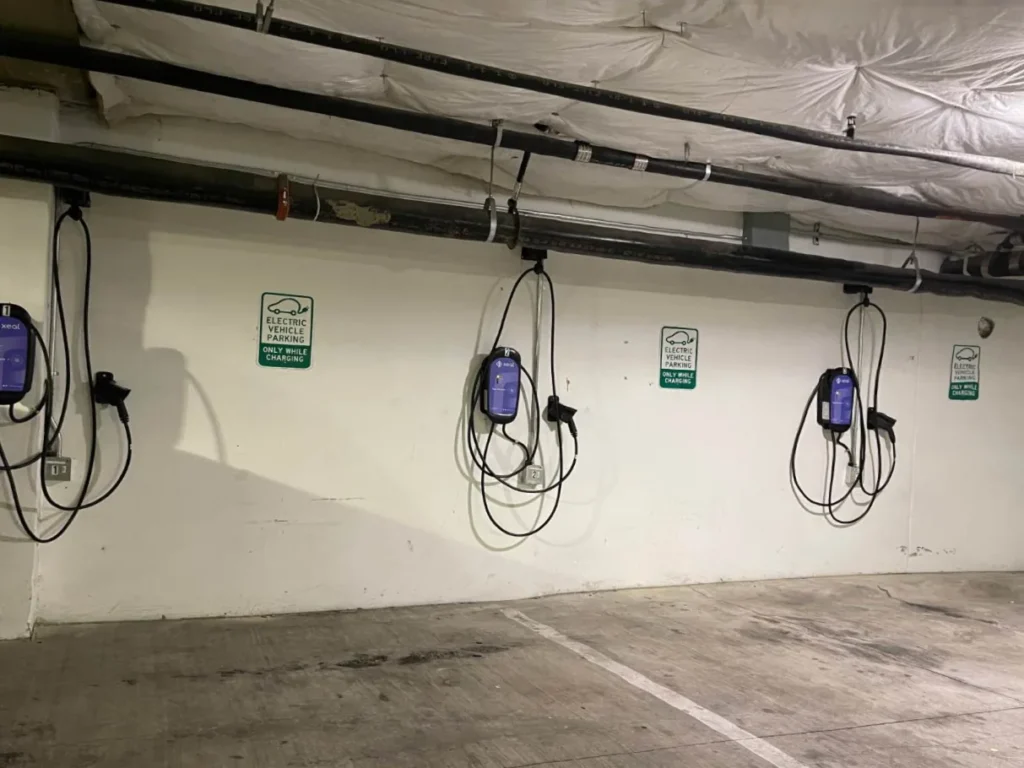
An undersized EV charger circuit is not a minor inconvenience. It is a safety risk that can damage your equipment and your home. Recognizing the signs early and calling in a professional to correct the issue is the smart move. With the right circuit size, your EV charger will work as intended, every time, without drama, and without danger.